
Welcome to the 2026 Intima: A Journal of Narrative Medicine
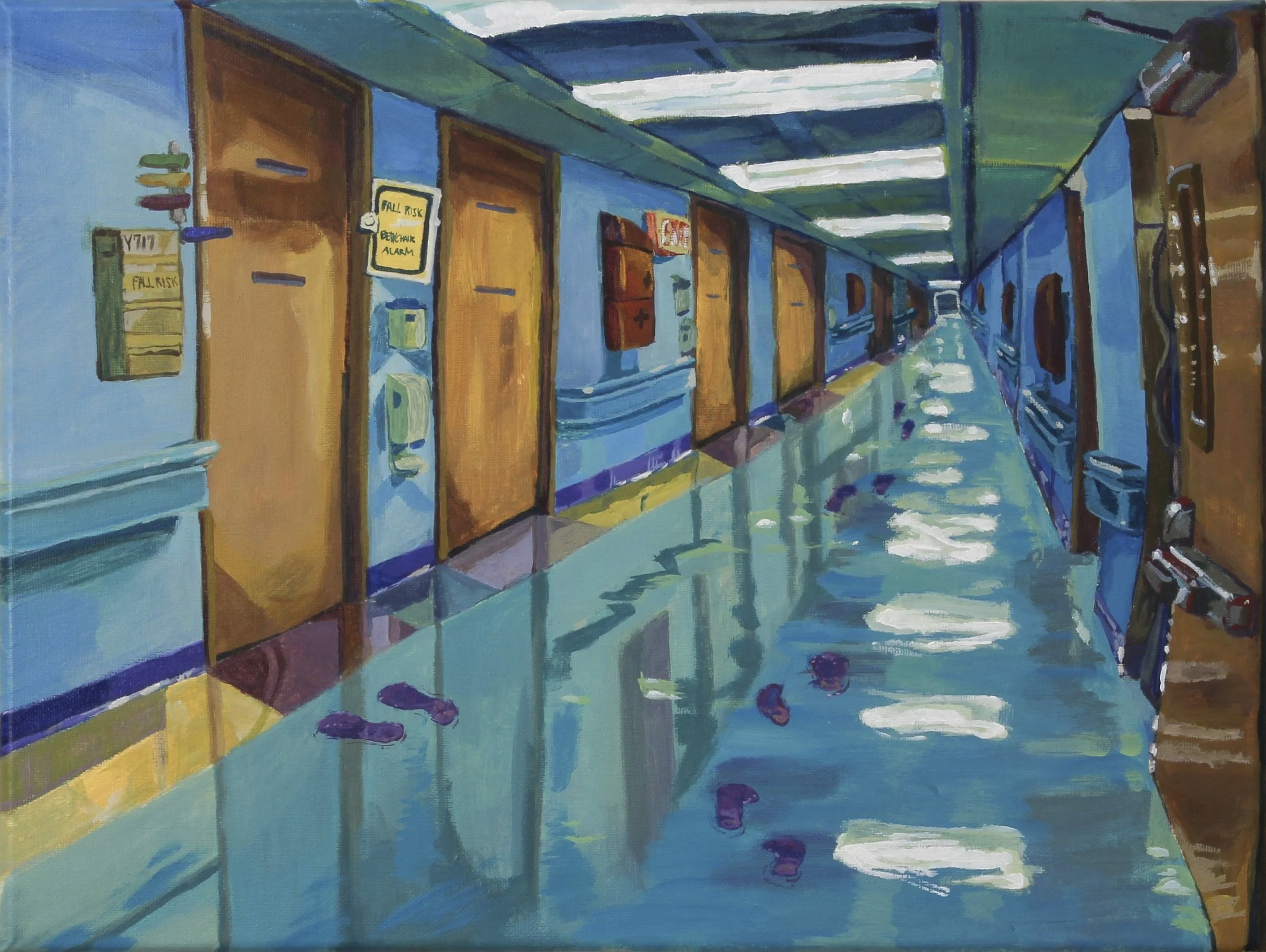
“Stepping into the Light” is a painting in a powerful triptych titled “Hidden Lore” by Annie Chen. Inspired by the themes of trust, purpose and collaboration that “define a hospital’s inhabitants,” the artist, who is a fourth-year medical student at Baylor, “used light and color to reframe the hospital as a place of sacred duty.” © Hidden Lore: Stepping Into the Light Annie Chen. Acrylic on canvas
We are excited to share our new issue with its many relevant themes that we as readers and clinicians grapple with today: how words shape reality in the AI era; the death of a beloved parent or colleague; the mysterious illness of a child; living with a chronic condition; and finally, being deeply engaged during a clinical encounter.
***
One of the loveliest passages about engagement is in the essay "Arrival" by Minnesota psychiatrist Jonas Attilas:
So when you begin to enter my office, it feels a little like watching a sunrise. Something—some fragment of history—is about to be revealed. Light will fall on what was previously unseen. The unknown will begin, gently, to take shape.
Embracing the 'unknown' and allowing an experience to teach us something about health, wellness and the vocation of being a caregiver sits at the center of the essays, short stories, poetry and artwork in our Spring-Summer 2026 Intima. That willingness to question the norm—bypassing the predictable course of treatment and reflecting on ‘what else could it be and how else can we act’—shows up in the Field Notes essay "Telemetry" by Crystal Ralls, where a patient asks for a monitor to be removed. Critical care nurse Katherine Toler reminds us of the high stakes of healthcare during Covid in her suspenseful essay "Tablespoons of Air." Establishing a rhythm and practice during rounds can have a playful side, as in "Space Cadet," an essay by Adnan Askari, a medical student at the University of Chicago Pritzker School of Medicine, where a relationship between patient and doctor evolves with scribbled notes and a paper toss game.
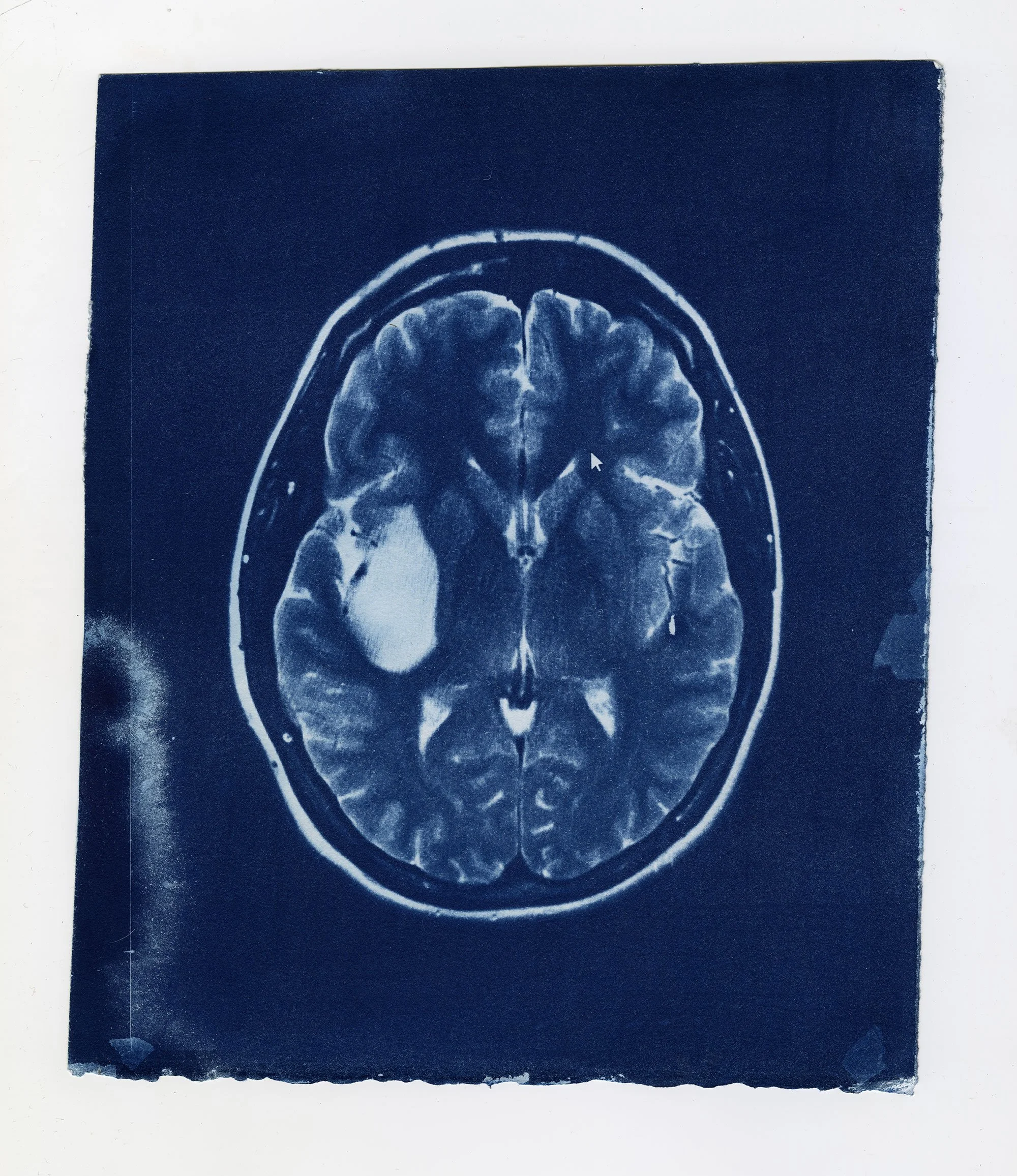
Beautiful in Blue: Finding a Sense of Agency and Awe in Printing My Glioma by Katerina Obscura
Transforming specialized medical imagery into a cyanotype affected the way this artist viewed her diagnosis during brain cancer treatment. © Beautiful In Blue by Katerina Obscura. Cyanotype print on watercolor paper
Immerse yourself in this issue’s FICTION, including “Lady in Waiting,” by Johns Hopkins medical student Divya Manikandan, about a woman contemplating the various meanings of a medical finding, a story our fiction editor called “so original, it took me to a new place in the world where disease was viewed differently.” (Living with uncertainty and multiple outcomes because of a chronic illness or cancer also has a presence in essays such as "It's Likely Nothing, "Immunologist, Unclassified," "She'll be Right, Mate" and "Survivor Guilt.")
"Blueberries," a moving short story by Toshita Kumar, dwells on friendship and mentorship, describing how a neurologist tries to decipher a colleague’s unsettling habit of drawing clusters of fruit, a story the editors called “heartbreaking,” and filled with “tension and humanity.” Physician Kenneth Iserson’s story “Voice from the Back” also focuses on the theme of remembering, of keeping an esteemed radiologist’s method of careful observation alive in our era of technology, an idea central to narrative medicine’s focus on listening.
Language remains a preoccupation for all of us, because we see what happens when words fail to deliver the message well. We challenge everyone to read "One in 100,000 Children" by professor and father David Sleeth-Keppler, for insight about expectations and uncertainty. Likewise, "Re: Interesting Case" by New York City psychiatric nurse practitioner Sarah Cady will make you re-examine pat phrases. Research scholar Ethan Bell's affecting poem "Unstable Connection" concerns the use of translation technology when it falters, while "Three Notes" by professor and poet Gabriele Micozzi offers how music wakes up the memory in ways words cannot. And being silent while a child is born becomes a lesson about memory that physician Guilherme Coelho cannot forget in "Ilha Das Flores."
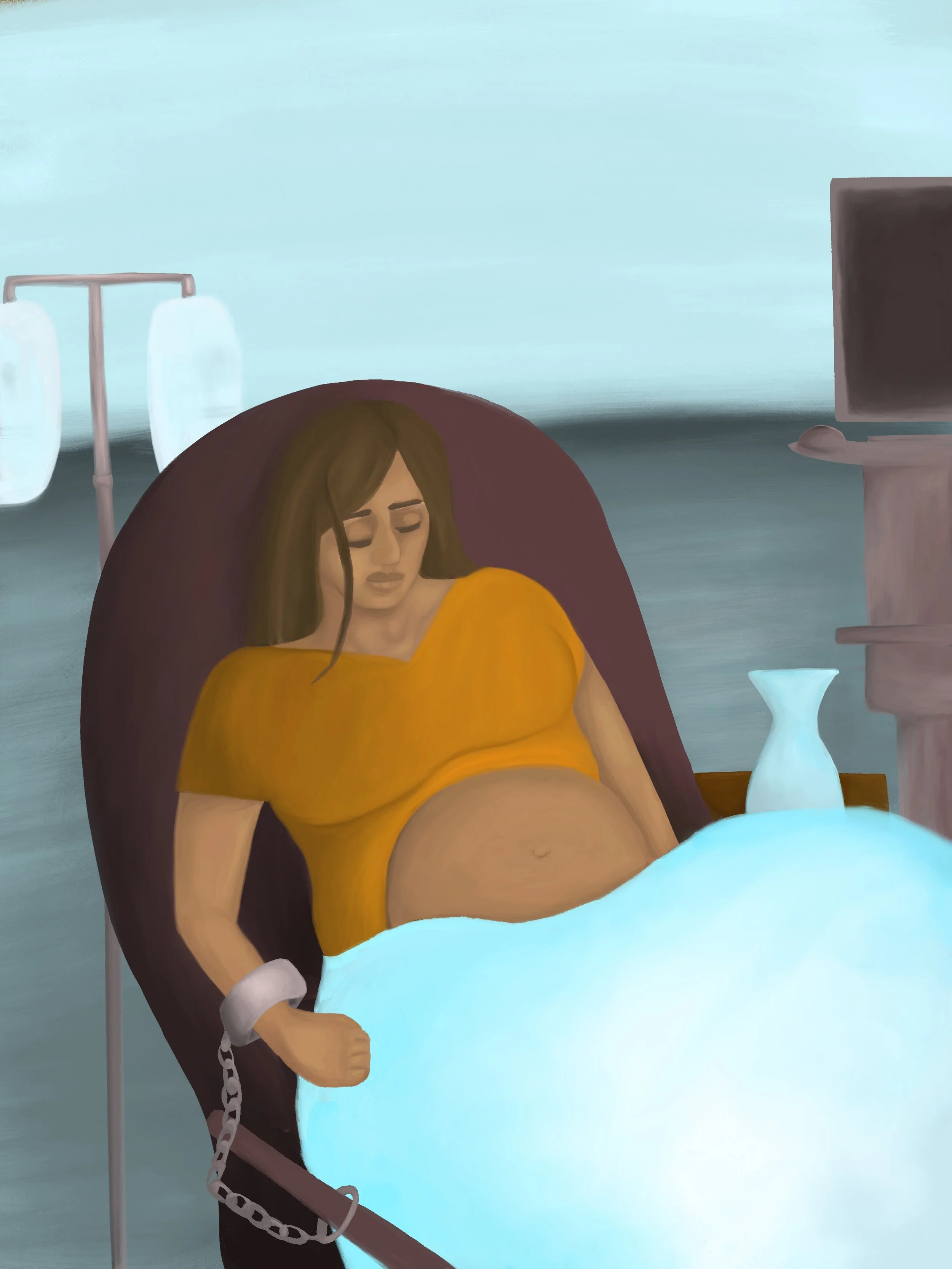
“ ‘Shackled’ was inspired by my experience during a correctional medicine project, where I visited a local detention center. While there, I encountered the reality of pregnant women in custody and was struck by stories of women being cuffed to hospital beds during labor. The work explores the tension between care and control, highlighting the loss of autonomy at one of the most vulnerable moments in a person’s life.”
Melfry Gonzalez Andujar is a medical student at the University of South Carolina School of Medicine in Greenville who is passionate about blending medicine, storytelling and advocacy. © Shackled. Melfry Gonzalez Andujar. Digital
Pre-med student Anika Saxena’s short story, “The Portrait and the Body,” gives us a glimpse at a self-portrait that reflects the changes in an artist’s illness, conveying another core narrative medicine concept: the effects of illness on the body and the mind. Saxena portrays this experience in a way that only fiction can: by bending reality to make us see something new that lingers in our minds long after we finish reading the story.
We hope you discover work that speaks to you in our new issue. Our editorial board works hard to find meaningful poems, short stories, essays and artwork to return to often to reflect and refresh your daily life and share with others. Stay in touch with us. We welcome thoughts about what we're sharing in our Spring-Summer 2026 issue.
—Priscilla Mainardi and Donna Bulseco for the Editors of Intima: A Journal of Narrative Medicine
Quisque iaculis facilisis lacinia. Mauris euismod pellentesque tellus sit amet mollis.